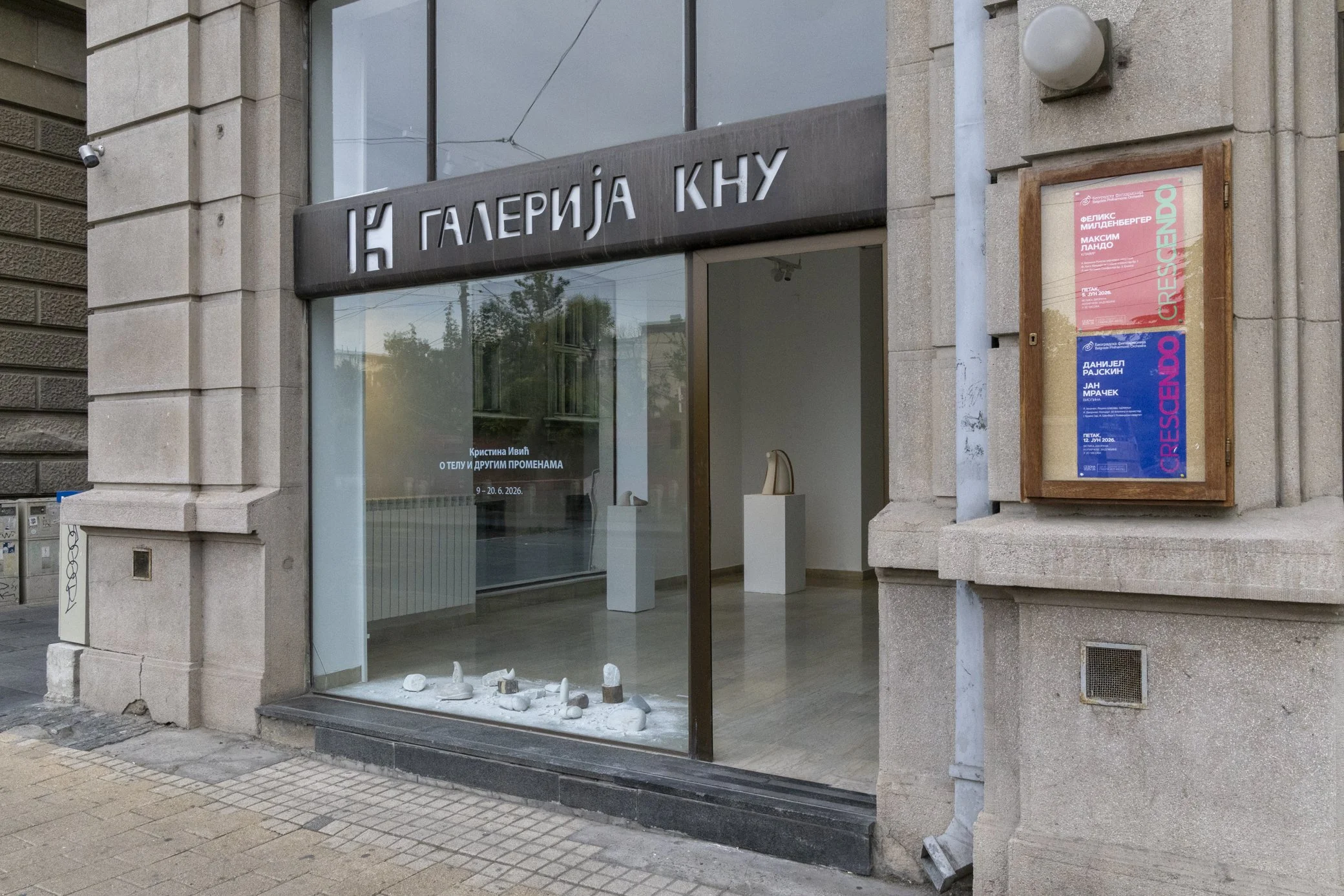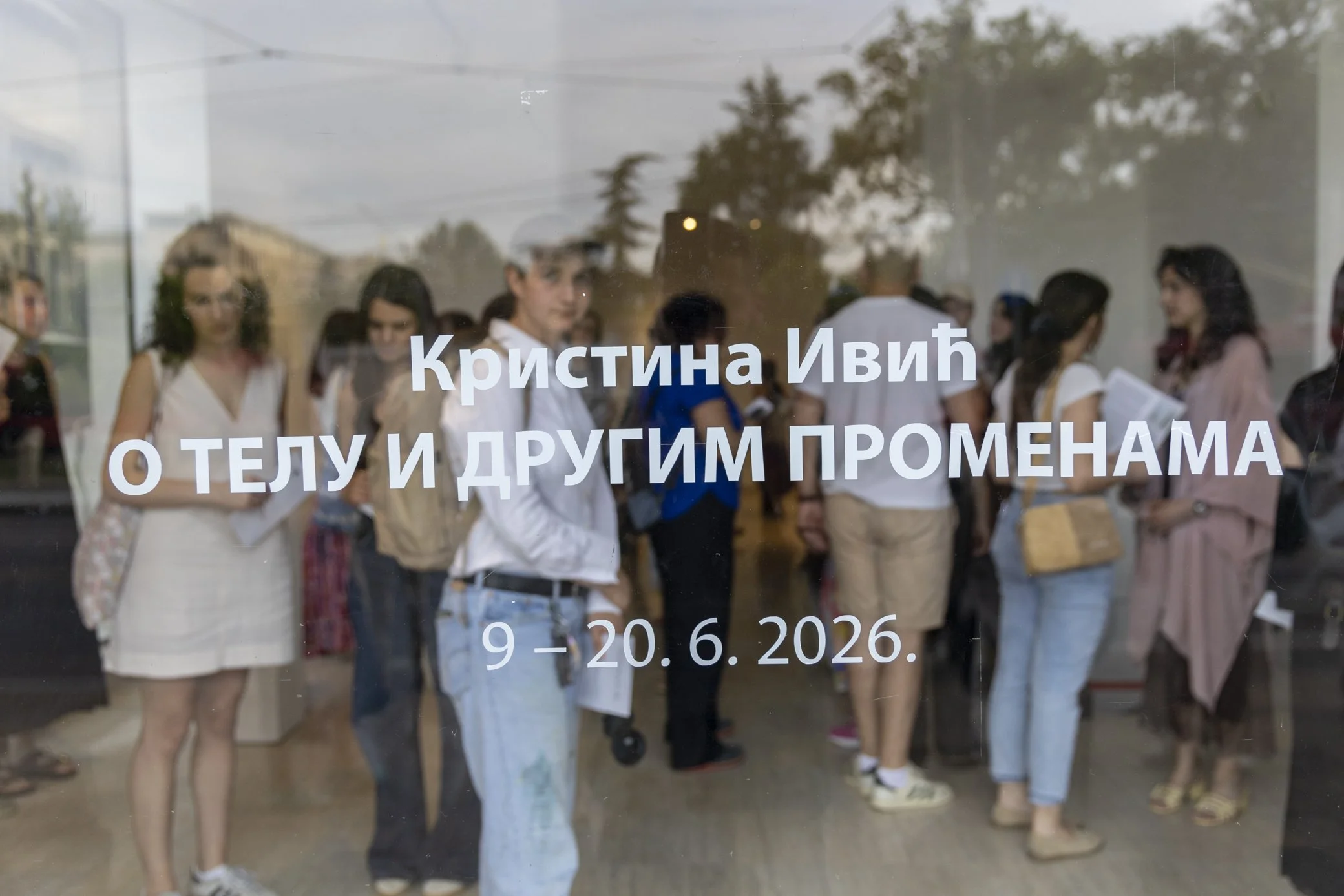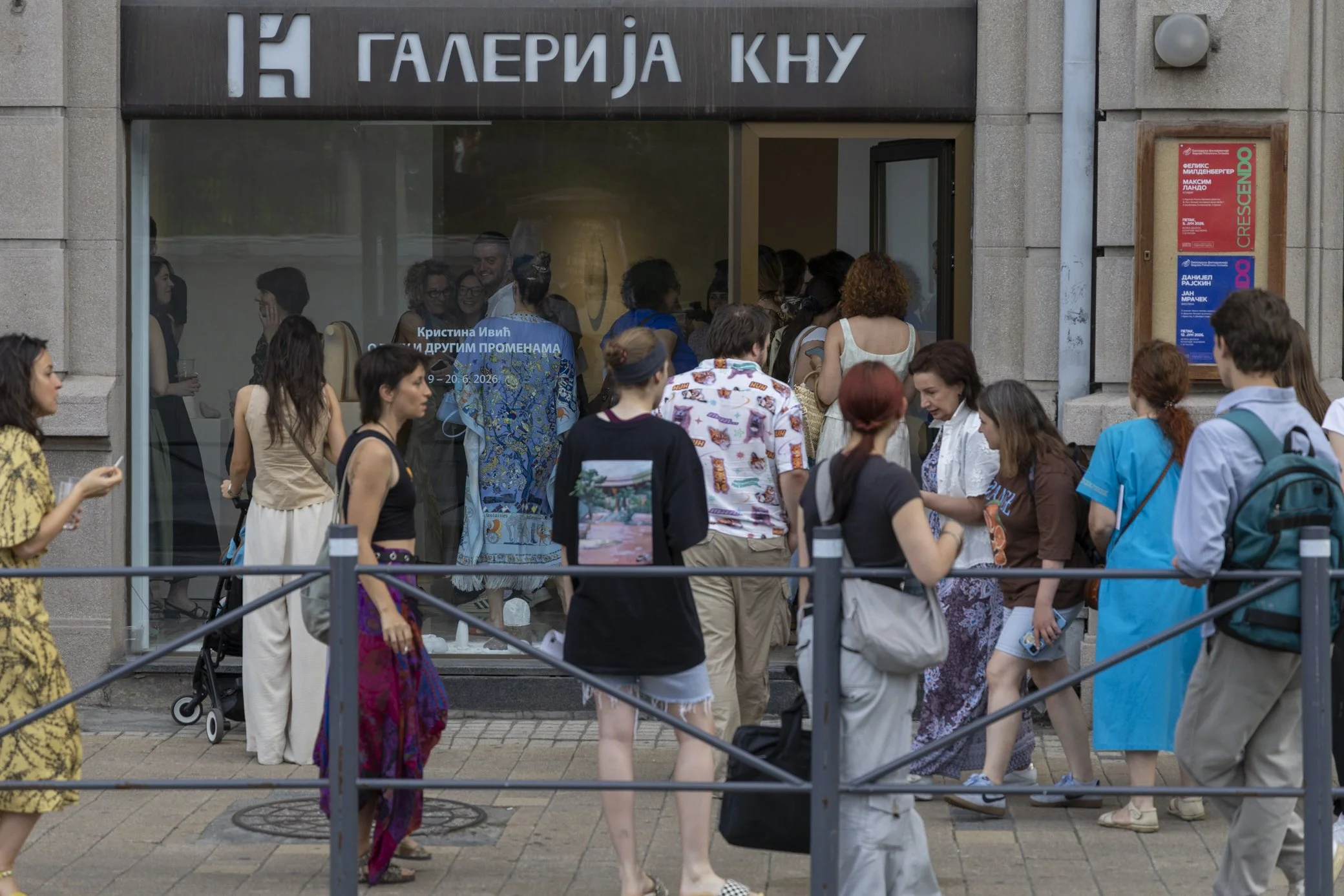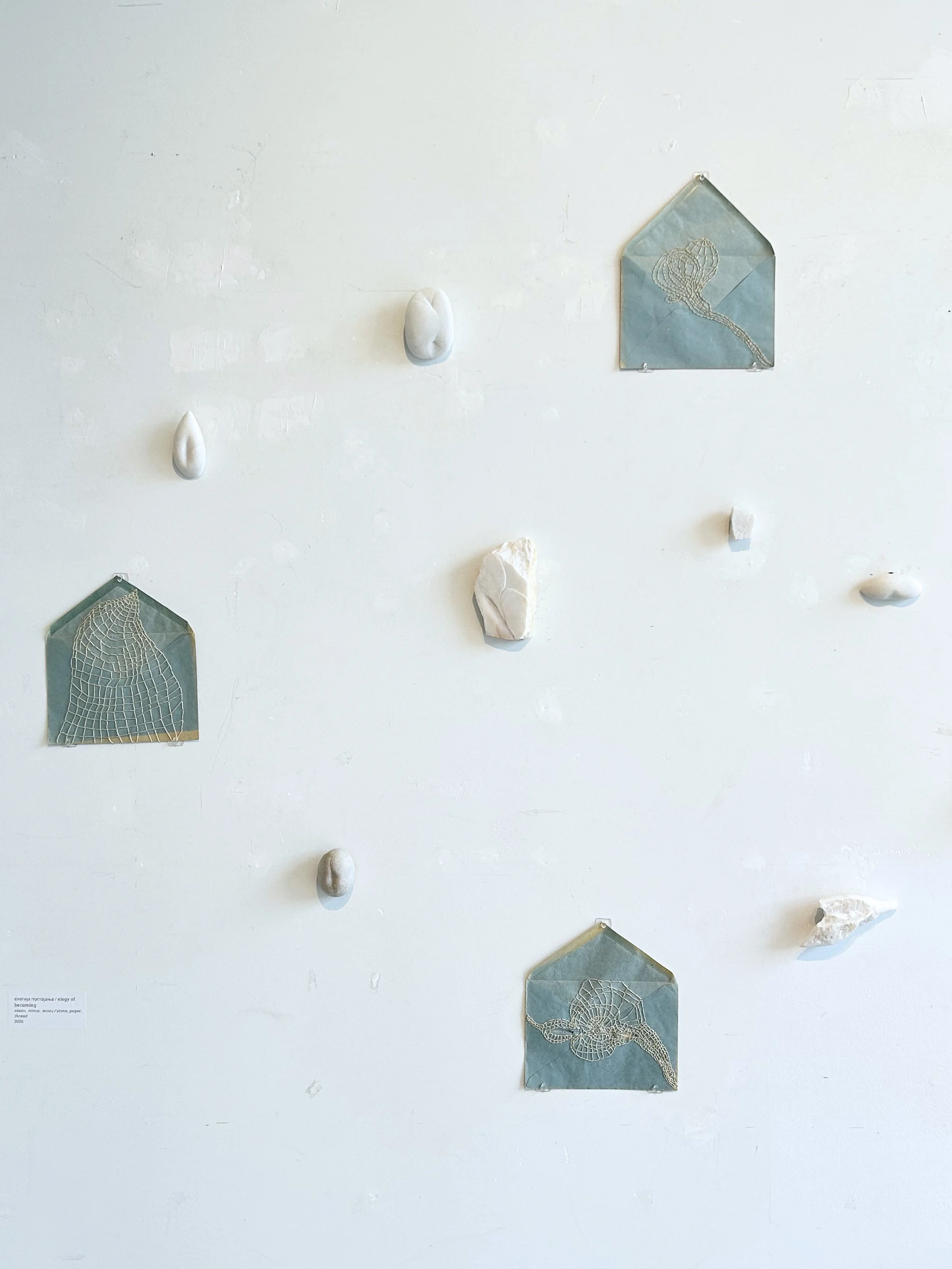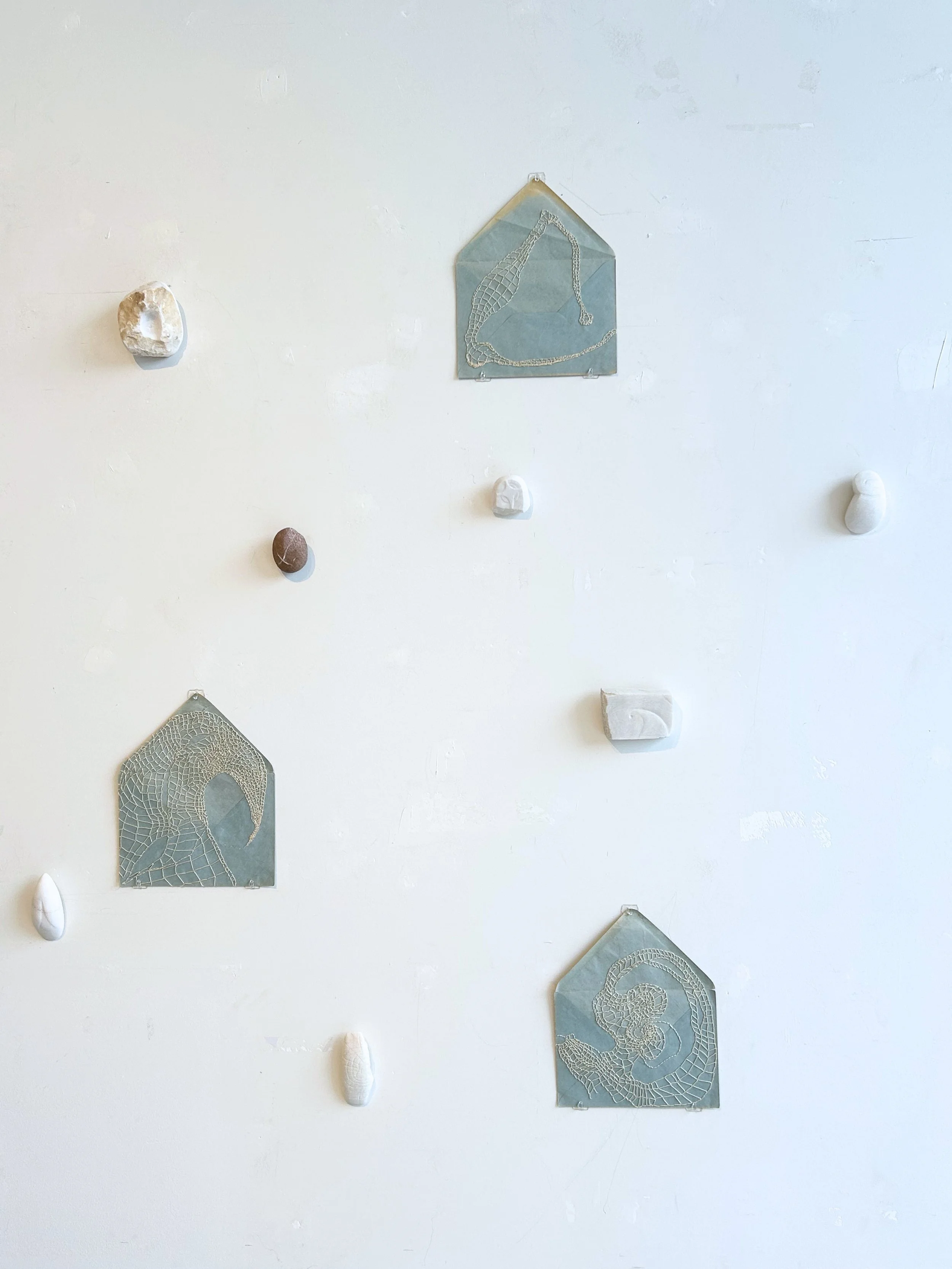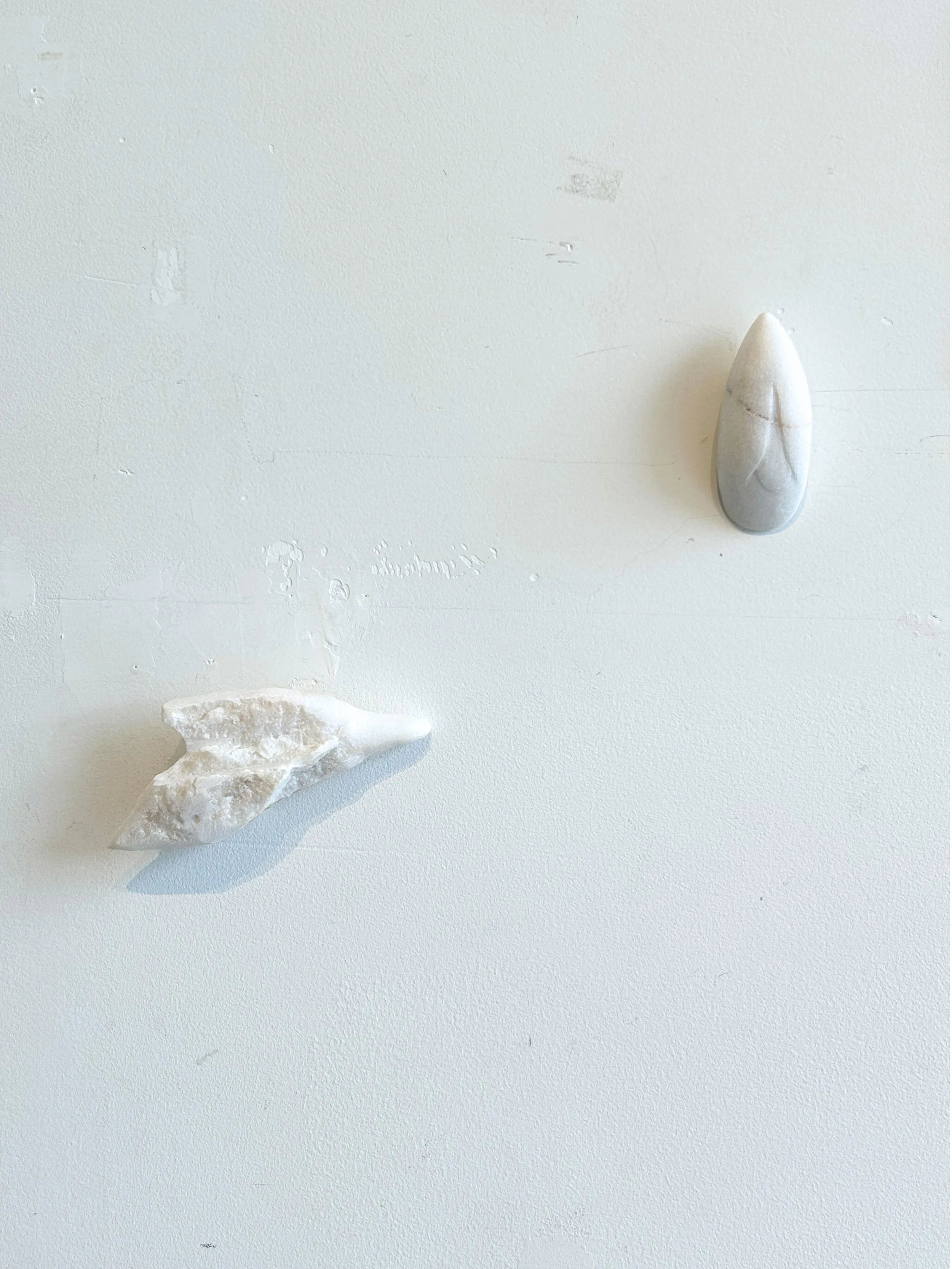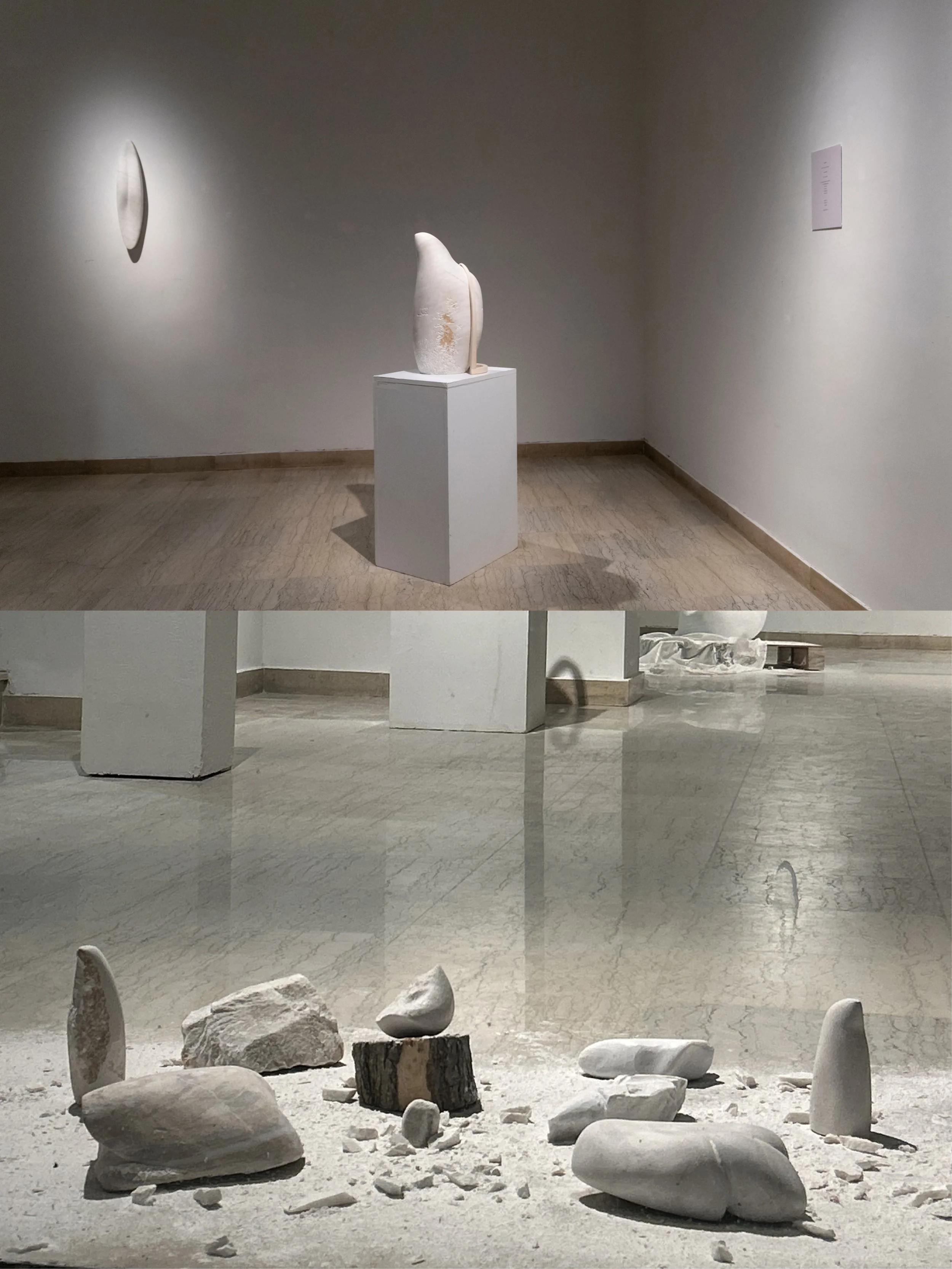
Of the body and other changes
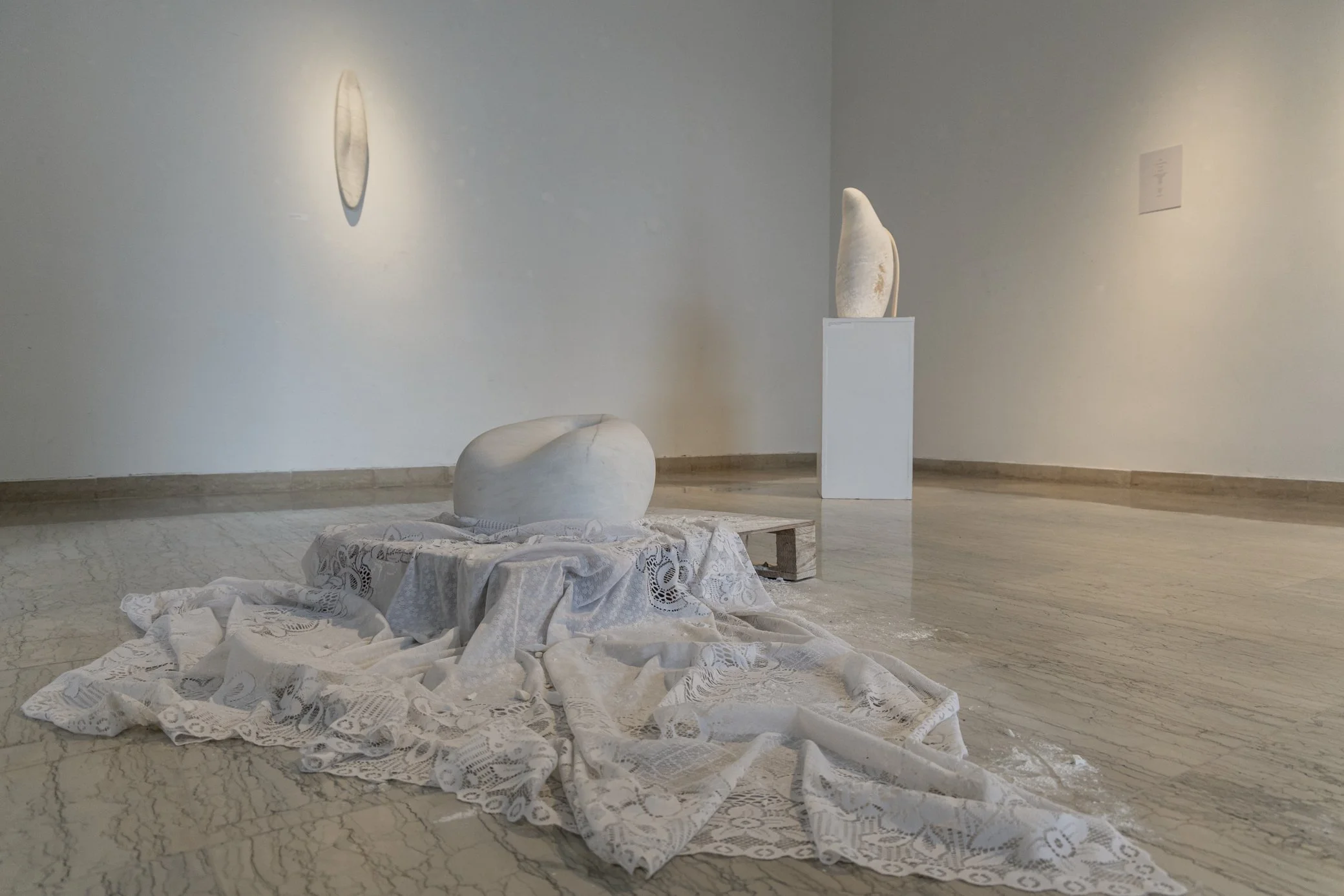
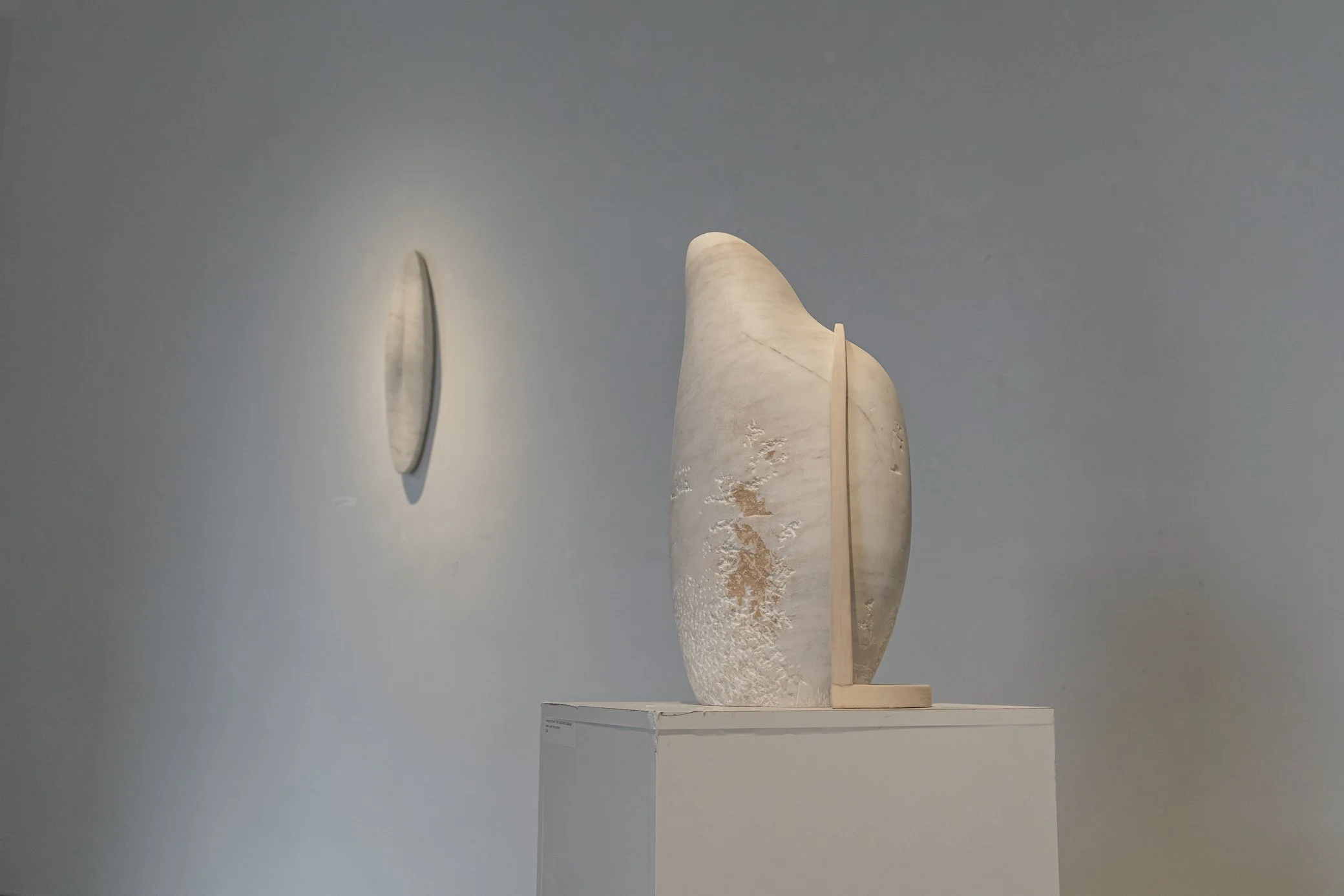
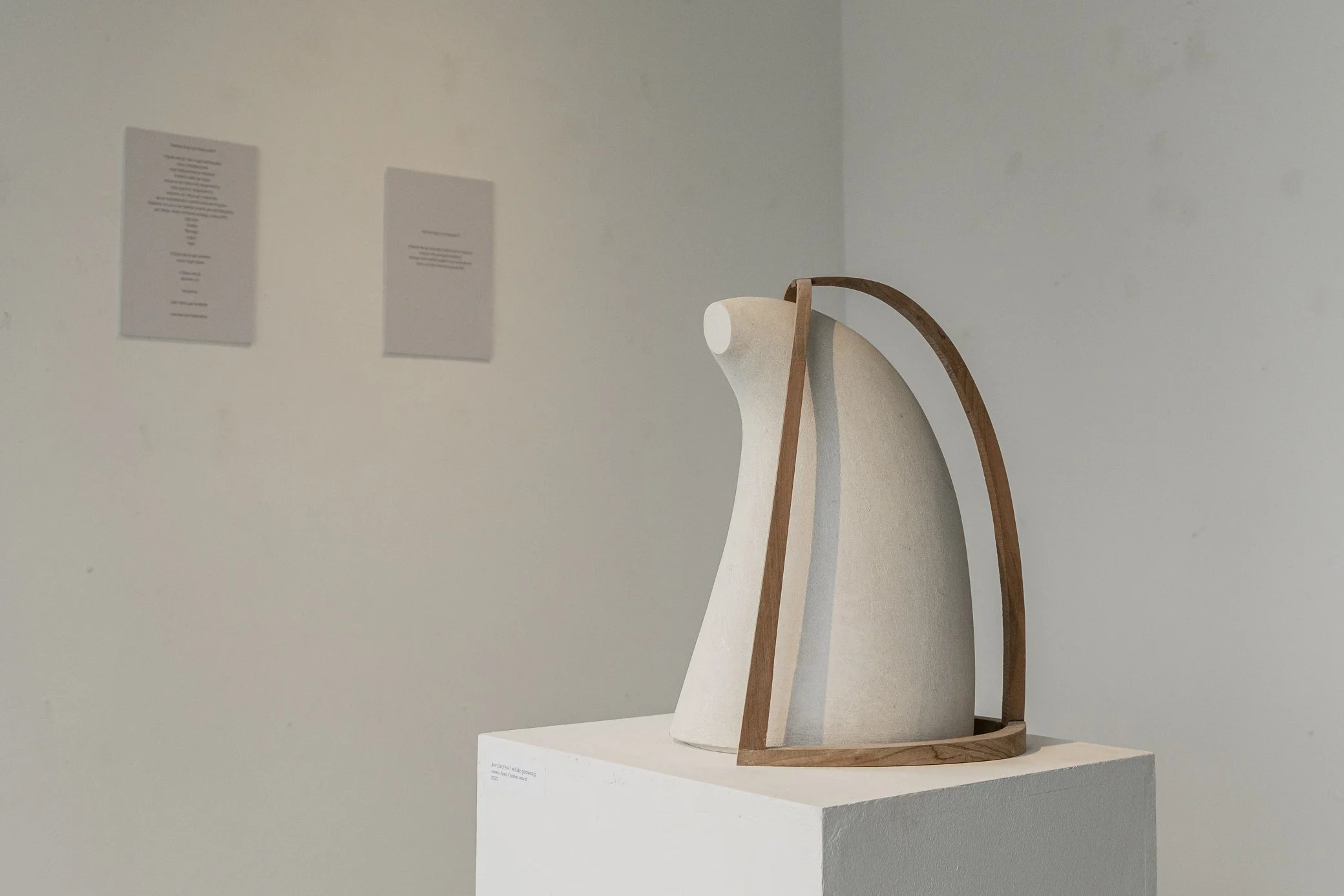
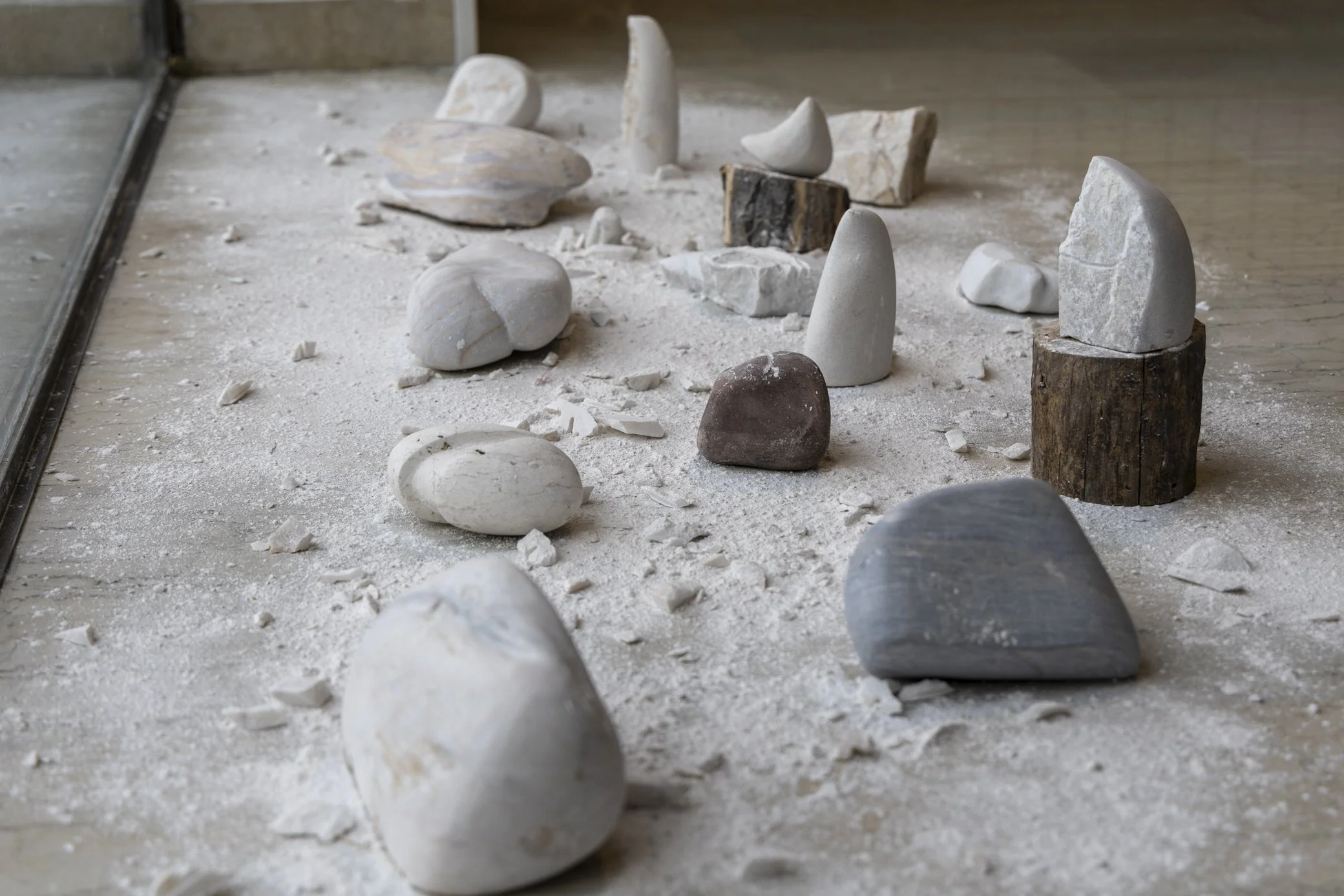
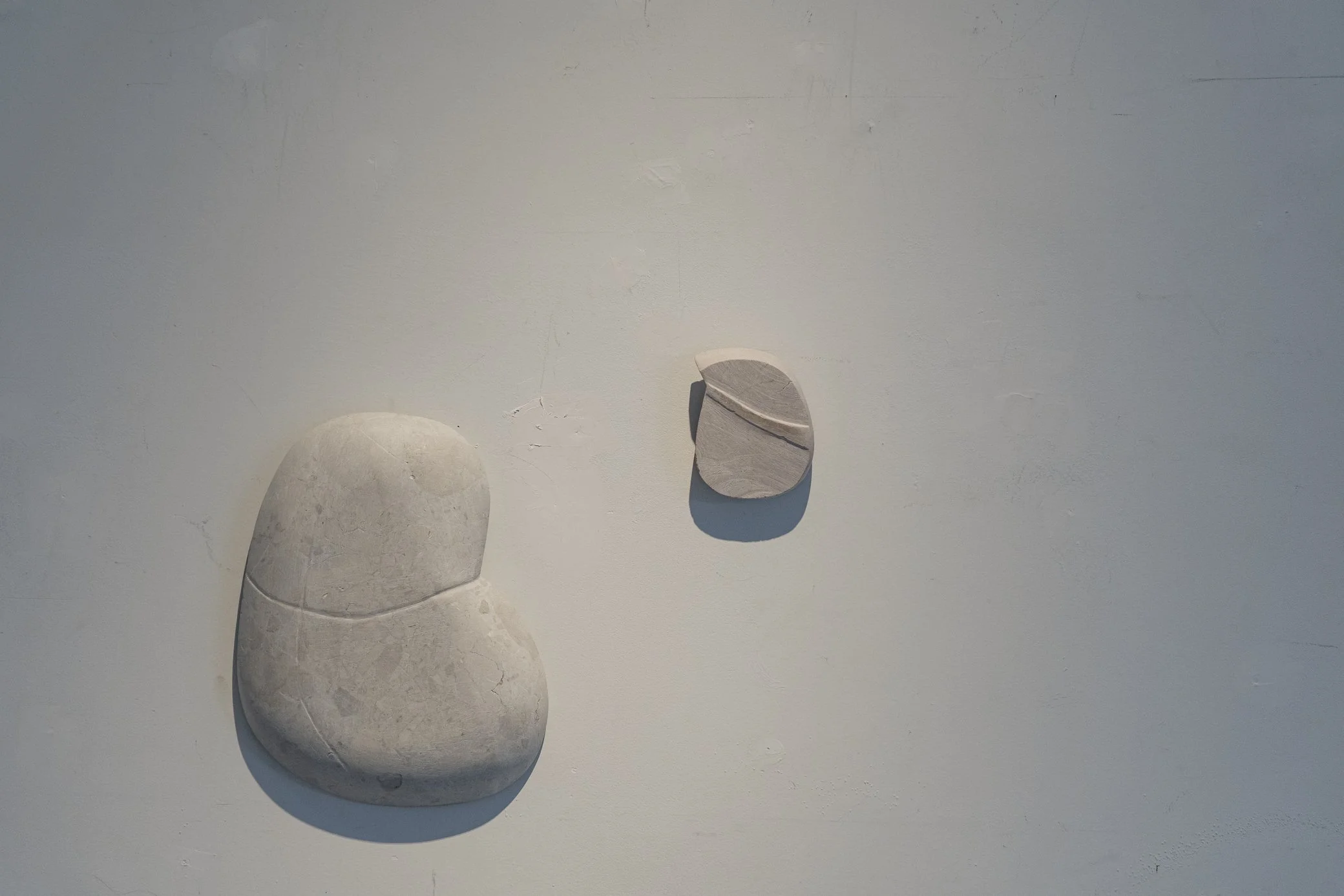
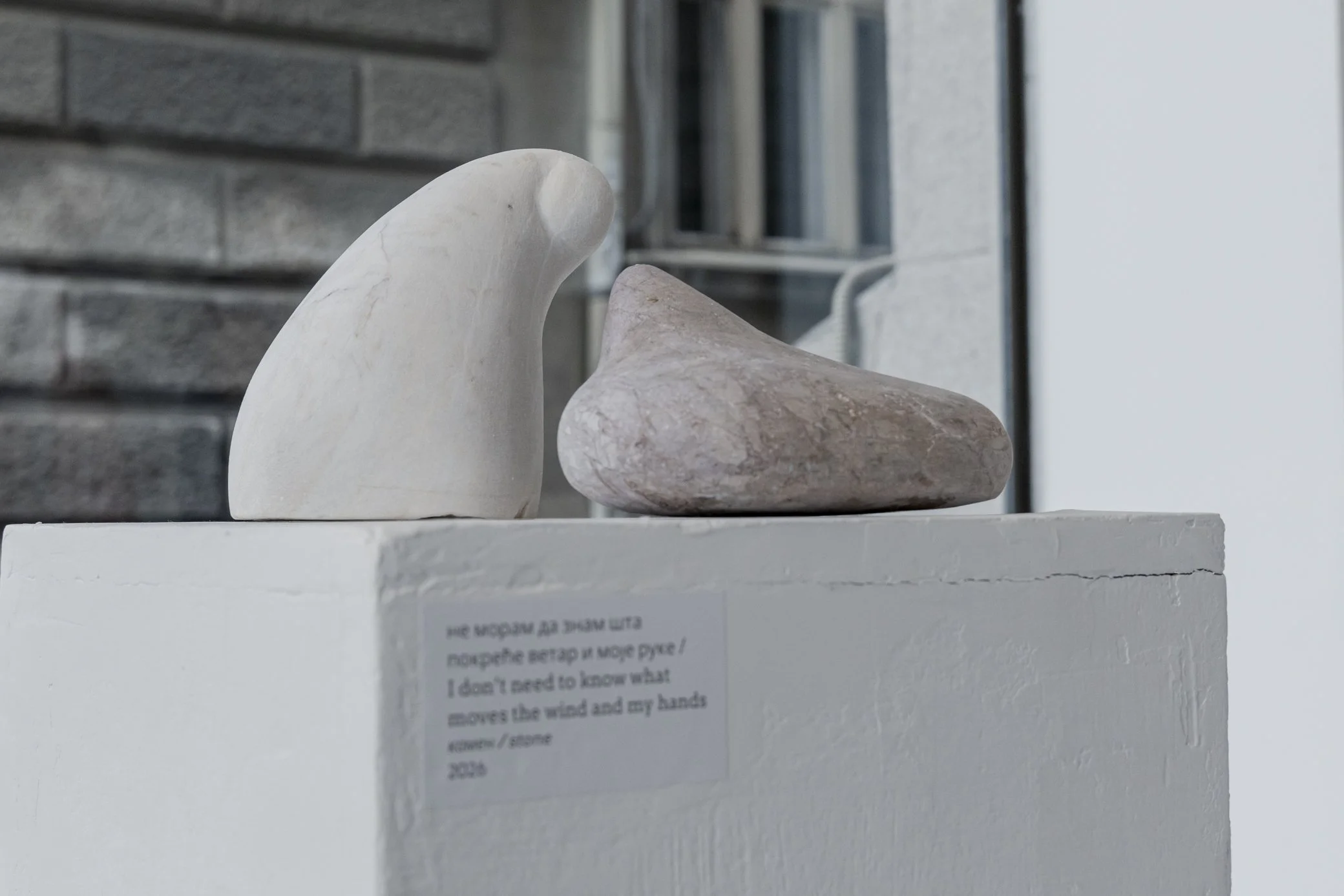
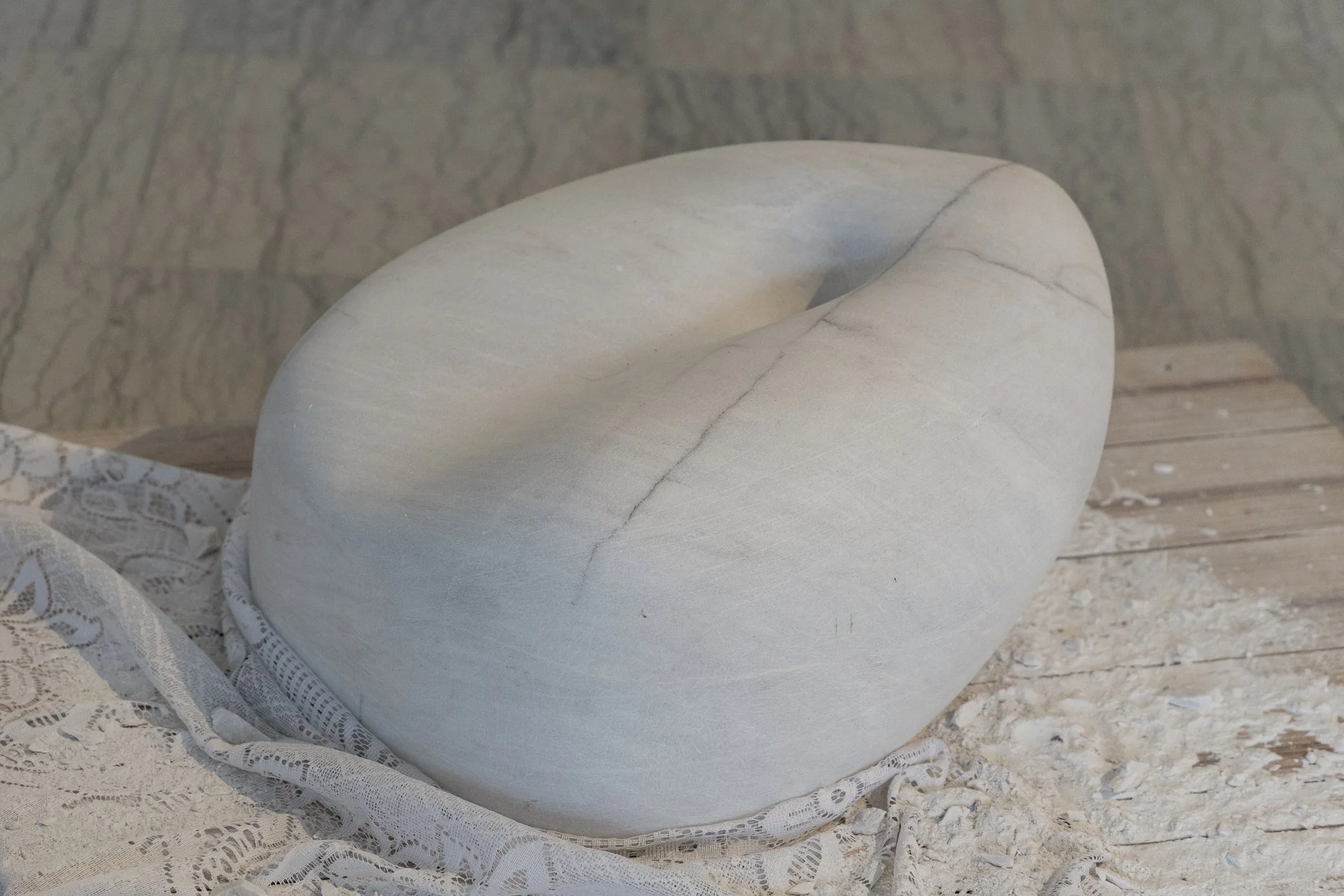
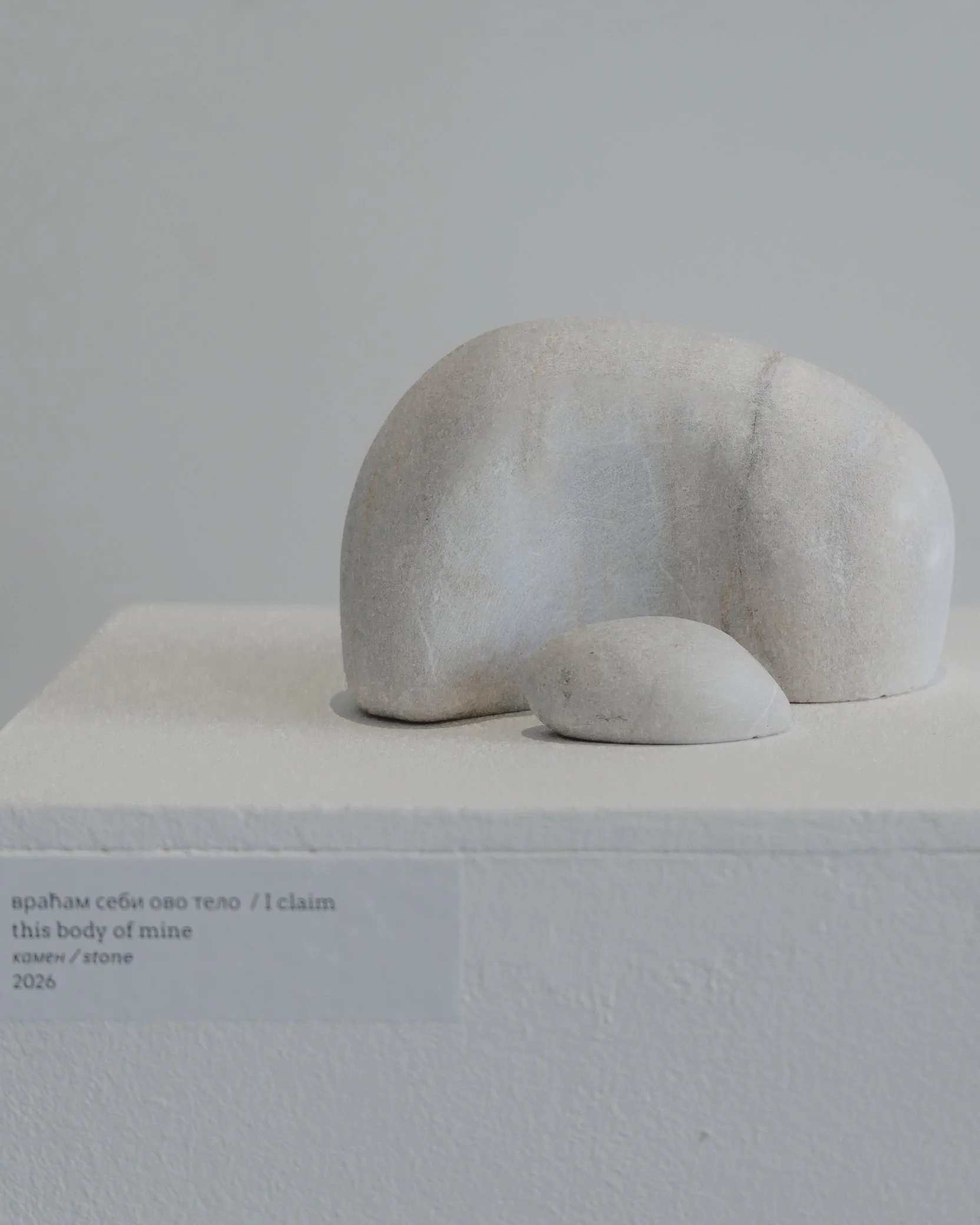
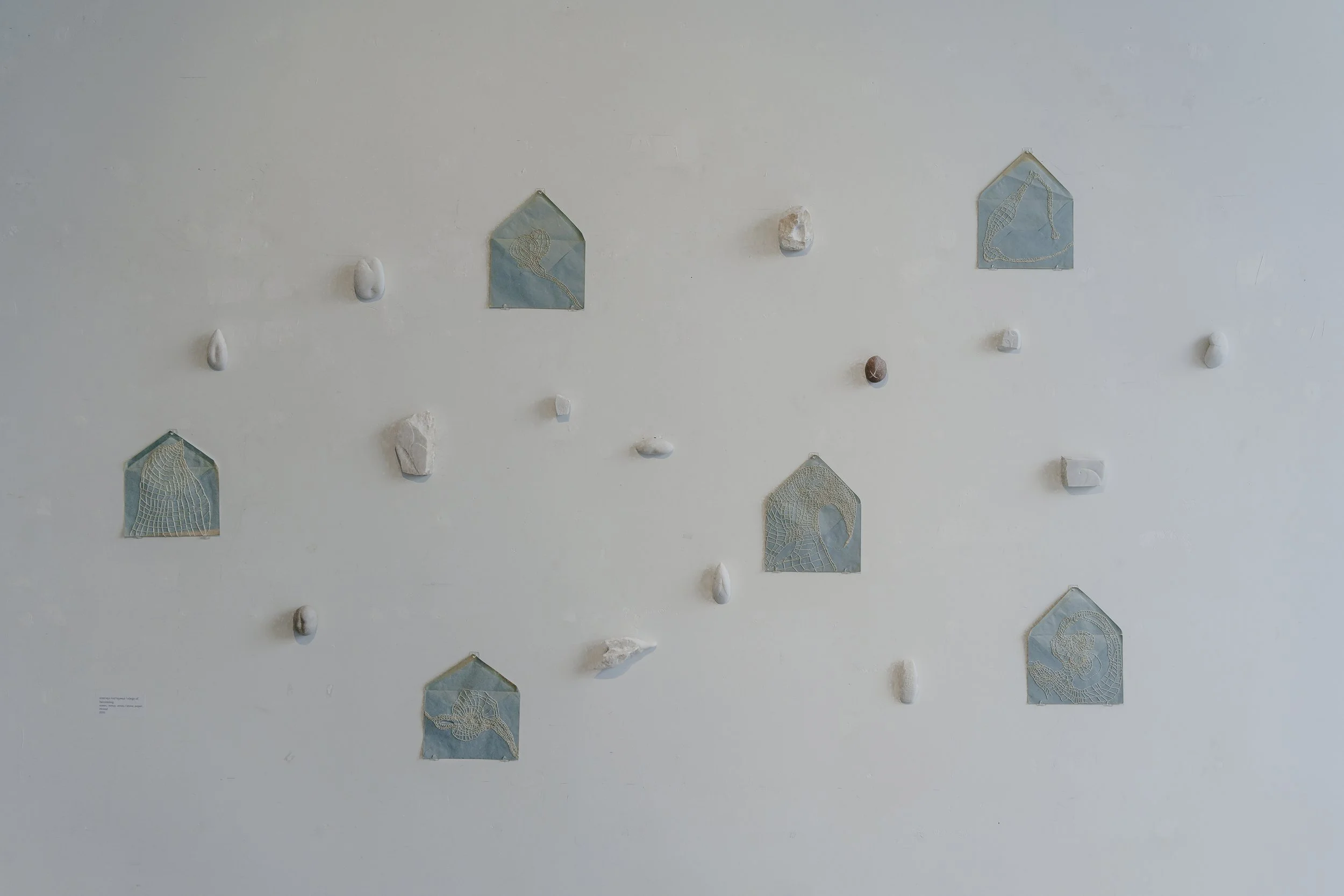
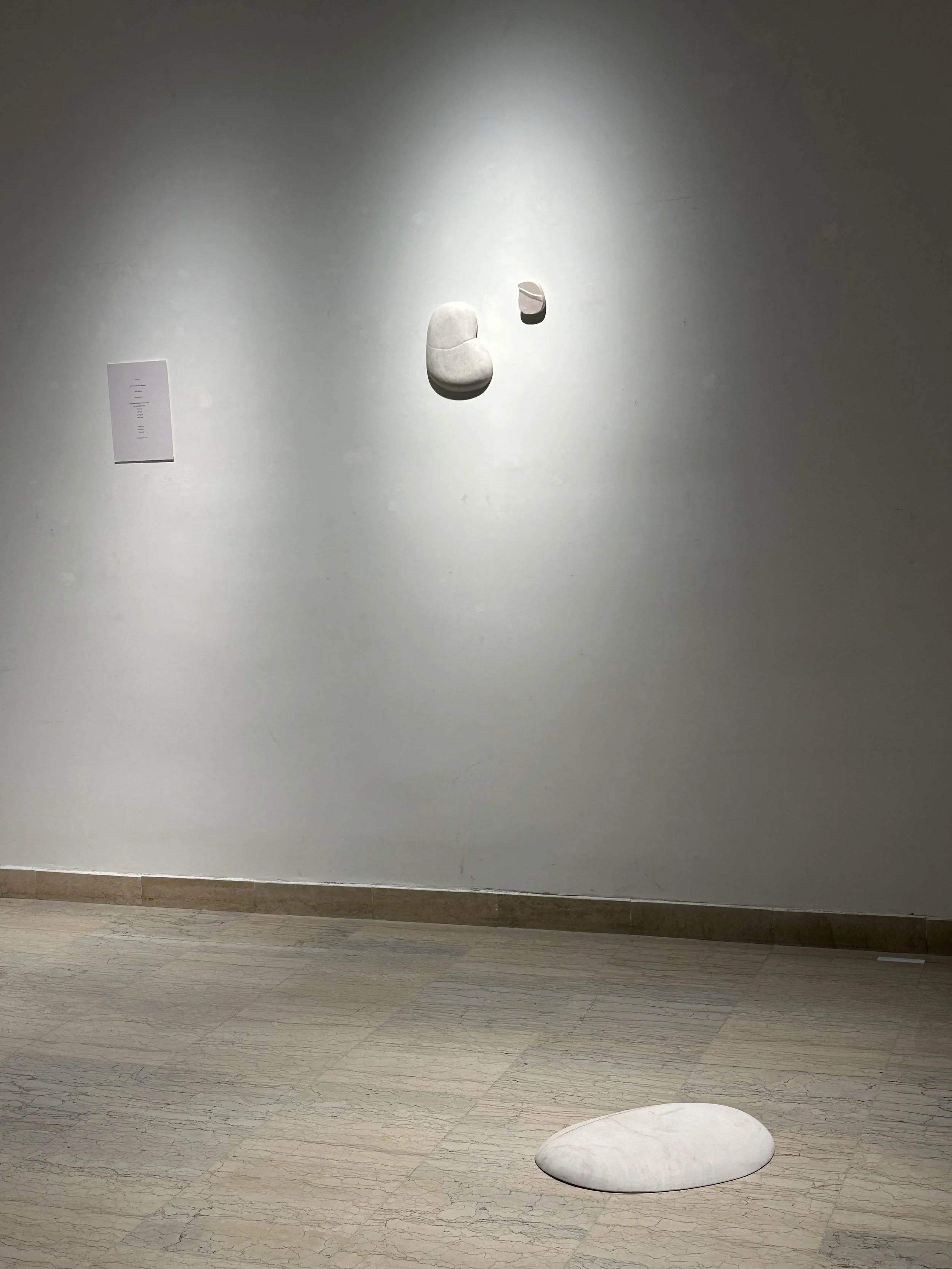
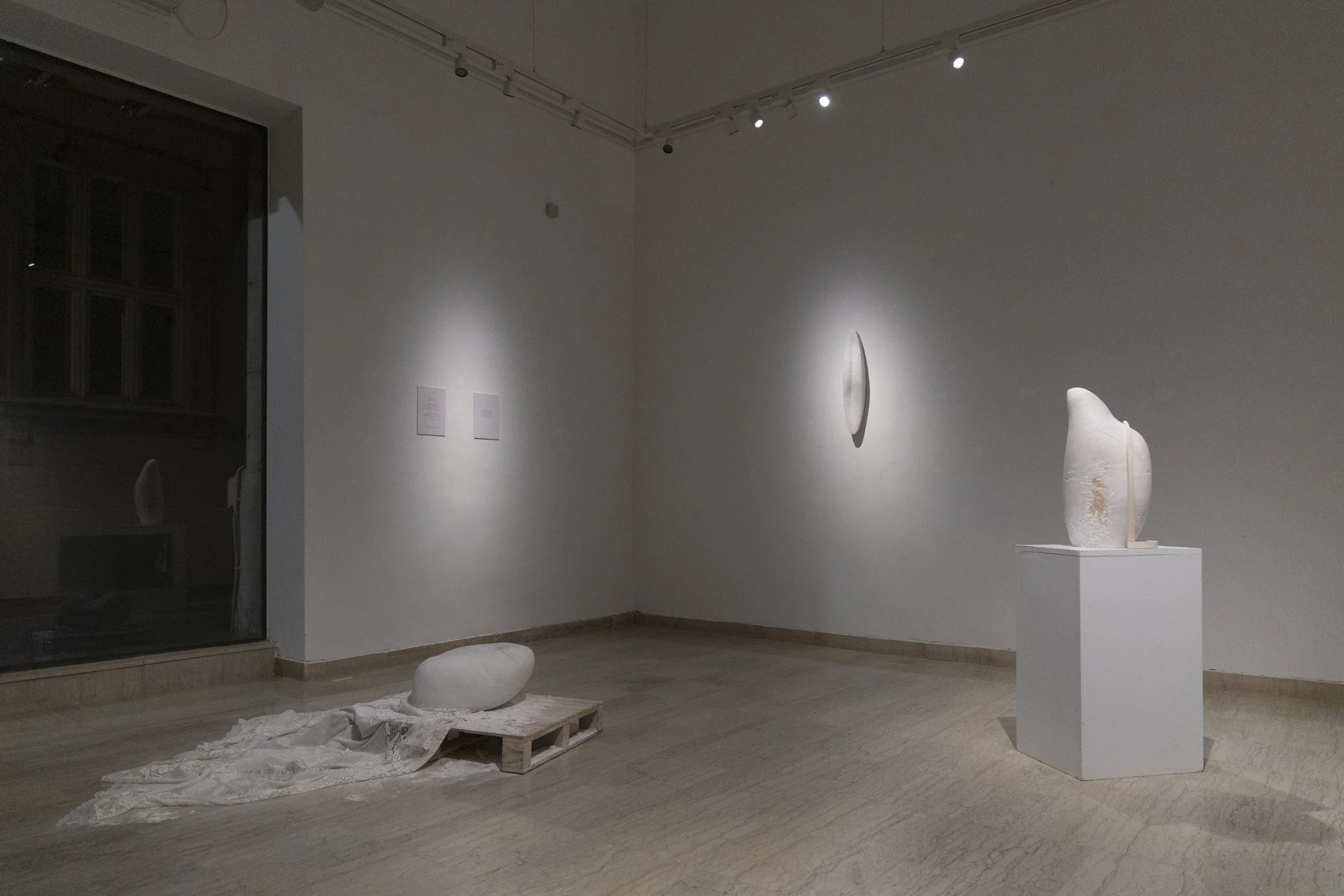
The works presented in this exhibition were created over the course of several years as part of an ongoing process of self-discovery and the sculptor’s engagement with shifts in thought and inquiry, personal fears, and the need to cultivate intimacy with her own body as a means of articulating her existence. Kristina Ivić’s relationship to sculpture and to stone—the primary material she employs—develops through an intuitive working process, without predefined forms or preparatory sketches. The sculptures emerge from a trust in the very act of shaping and, consequently, a trust in the truthfulness of her own response to matter, allowing form to be revealed rather than controlled.
Within these almost organic forms, one encounters tensions between resilience and tenderness, vulnerability and protection, alongside a desire for the body to be both sheltered and recognized, present and seen. For this reason, Kristina Ivić’s works appear at once familiar and elusive—as fragments of something deeply known yet still unnamed.
Every trace left in the material remains connected to the gesture of the body that shaped it. Within this relationship, the boundary between the body that forms and the “body” of the sculpture being formed becomes unstable. Sculpture becomes both a record of physical experience and a space in which the body can once again be heard—not as a disciplined form, but as something mutable and alive. Stone carving demands the craft of precision and control, yet in the moment of contact between the sculptor and the material, form begins to function as an extension of the bodily, the emotional, and the unspoken. Every shape that emerges through her practice bears the trace of something long present within her, something she allows the freedom to take shape in matter.
The theme of embodiment in Kristina Ivić’s work emerges through the experience of living in a body today—a body that remembers, feels, endures, changes, and attempts to survive within the rhythms of contemporary life. At the same time, it seems that we have lost trust in our own corporeality, accustomed to viewing the body as something to be controlled, accelerated, shaped, or overcome. In contrast to the logic of contemporary capitalism, which allows little room for pause, introspection, slowness, or gentleness, sculpture and materiality open a space for a different rhythm, duration, and experience of time.
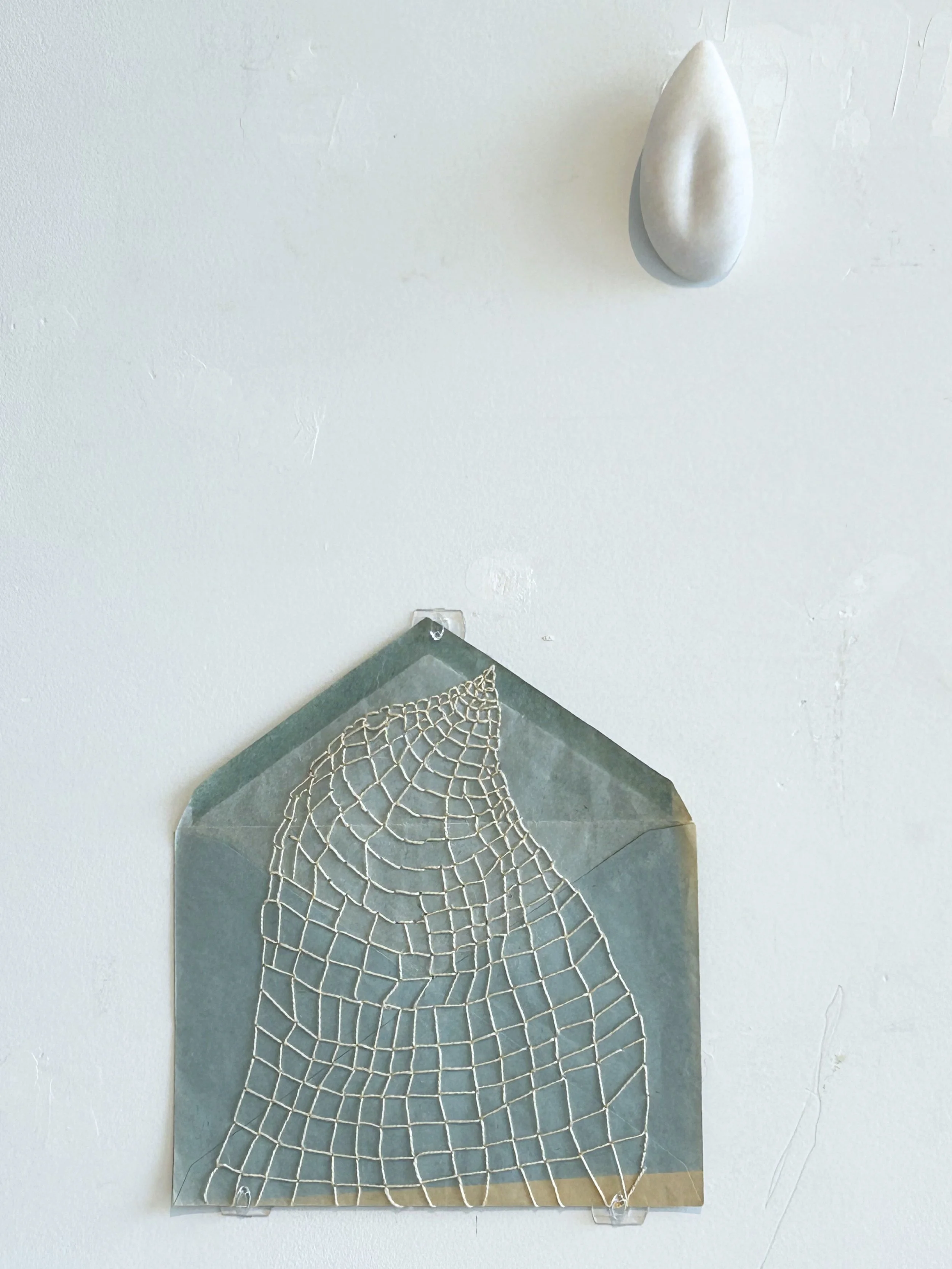
We always perceive the dimensions of artworks through the relationship to our own bodies—we measure them through our height, proximity, movement, and presence. For this reason, encountering a sculpture is simultaneously an encounter with an awareness of our own physical dimension. The presence of miniature sculptures and embroidery within Kristina Ivić’s practice further interrogates the notion of “women’s craft” and traditionally feminine forms of labor that have historically been relegated to the private, intimate, and invisible sphere. Here, embroidery appears as a mode of recording, repetition, and embodied work through which continuity is established between women’s experience, memory, and everyday gestures. By employing materials that belong to familial and personal spaces, the artist raises questions of inheritance and predetermined roles, while also exploring the possibility of transforming them.
Within the binary division of mind and body, in which reason has traditionally occupied a privileged and dominant position and has been associated with the “masculine principle,” the body has been understood as “feminine” — irrational, untamable, emotional, and something that requires control. This opposition is connected to other hierarchical pairs such as logic and feeling, consciousness and sensibility, the external and the internal, the self and the other, in which the bodily and the sensory have almost always been subordinated to the rational.
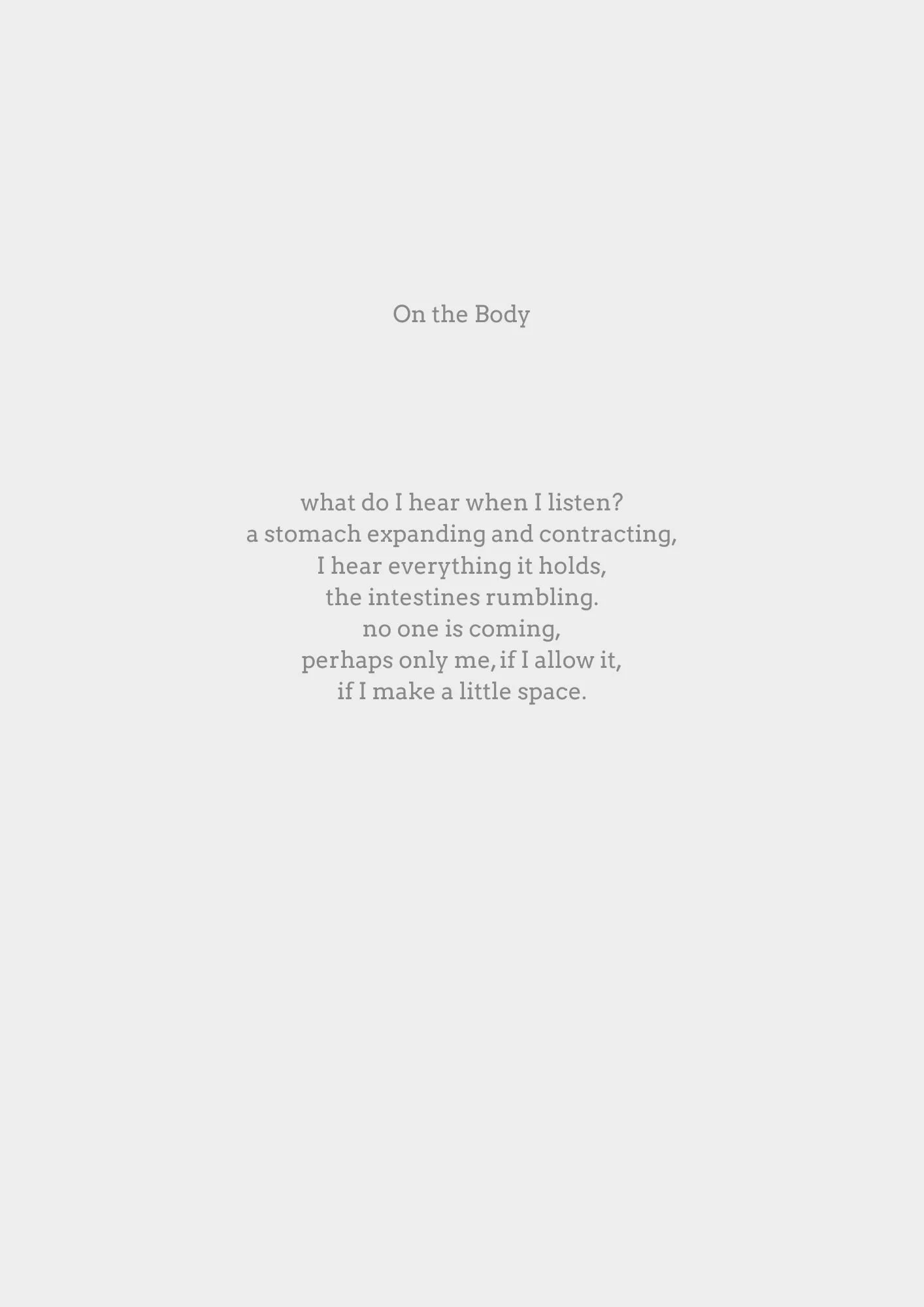
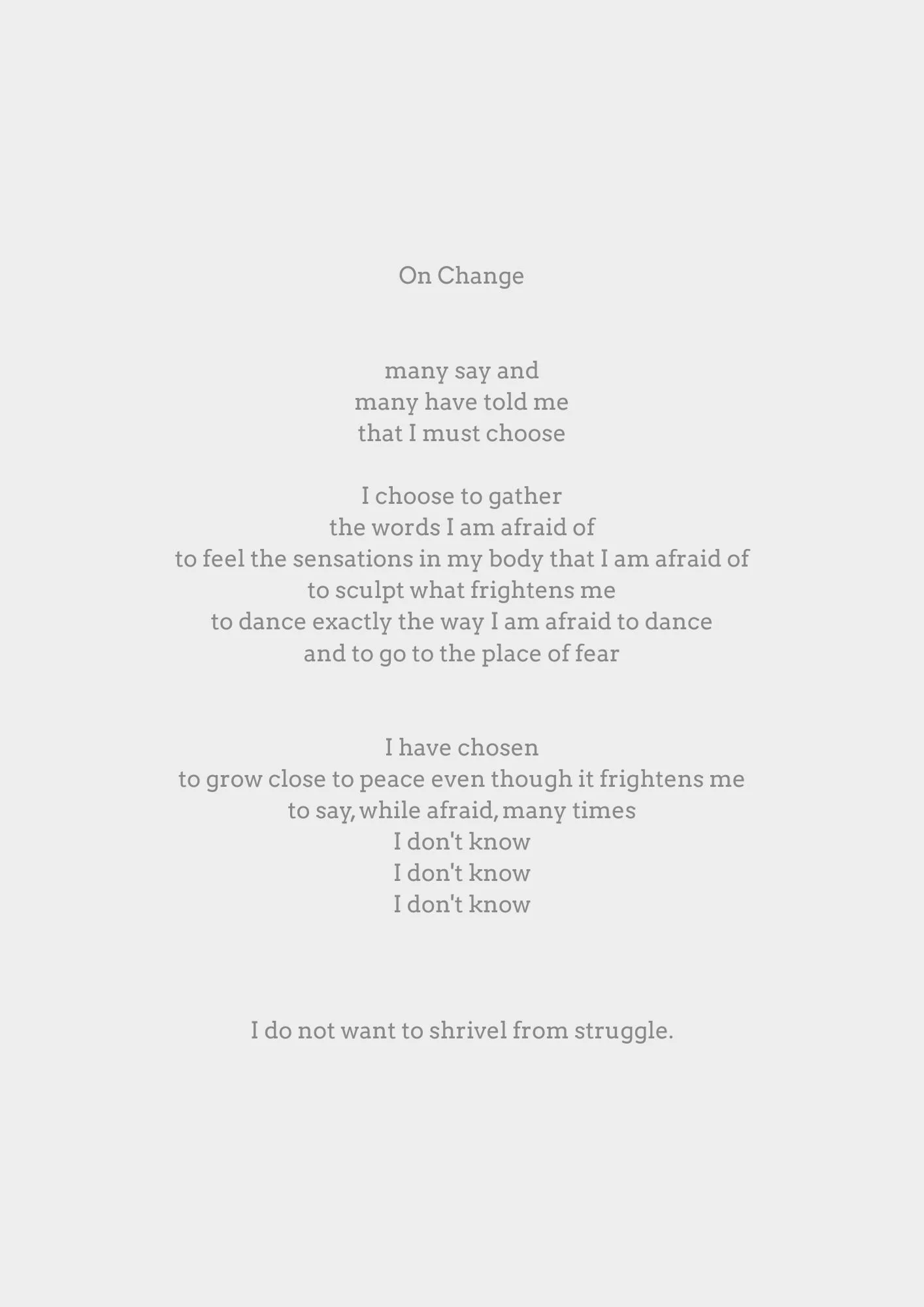
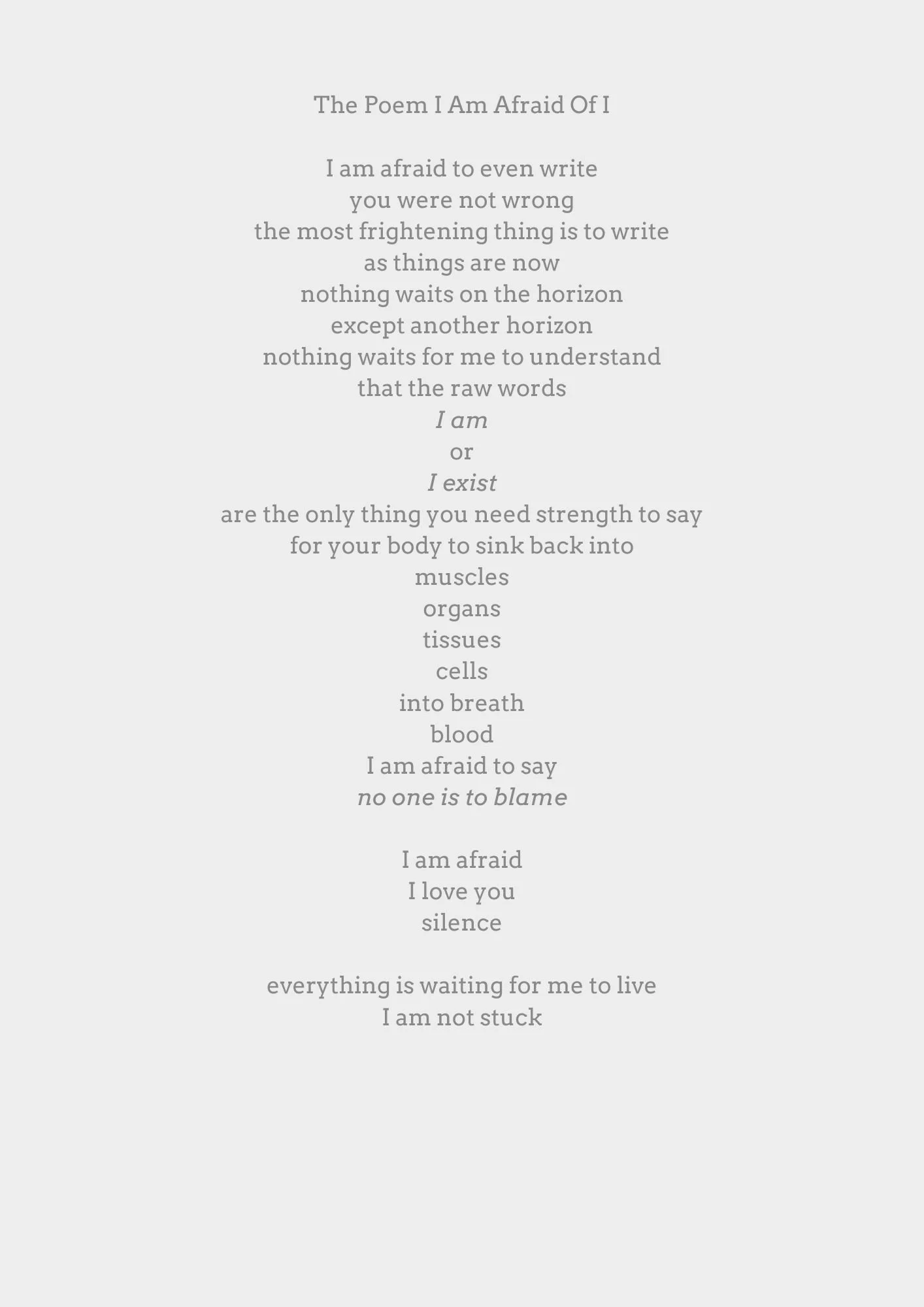
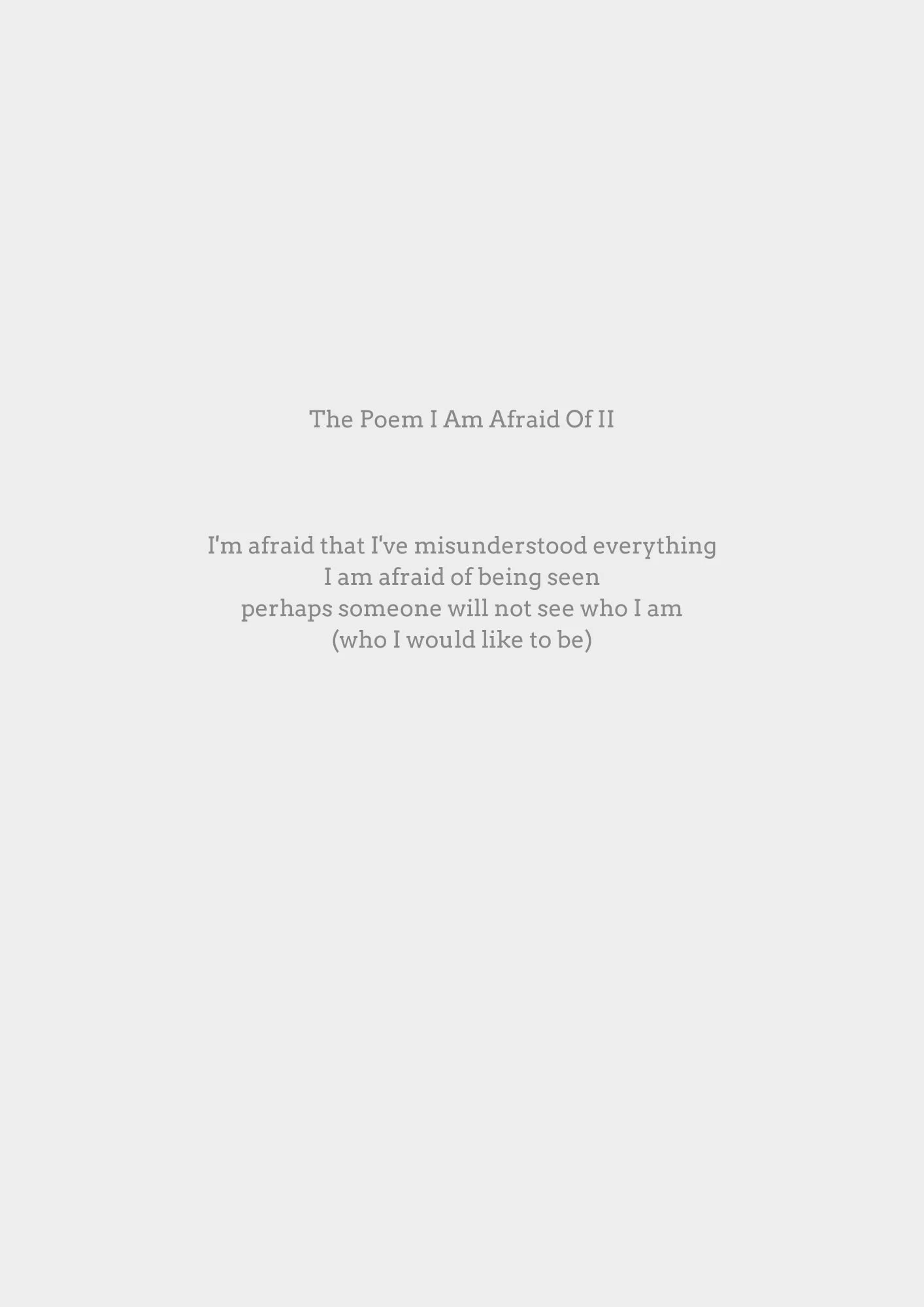
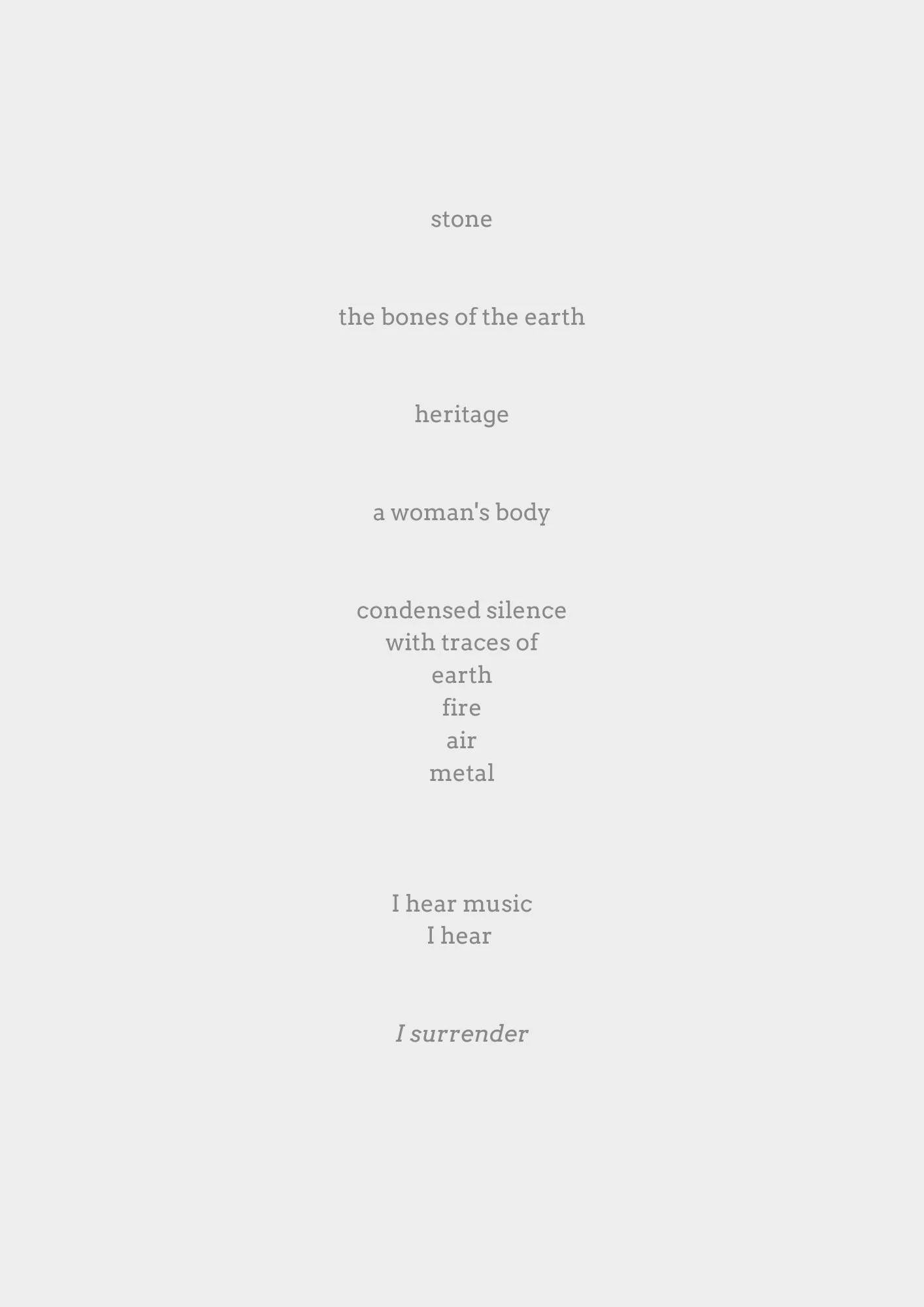
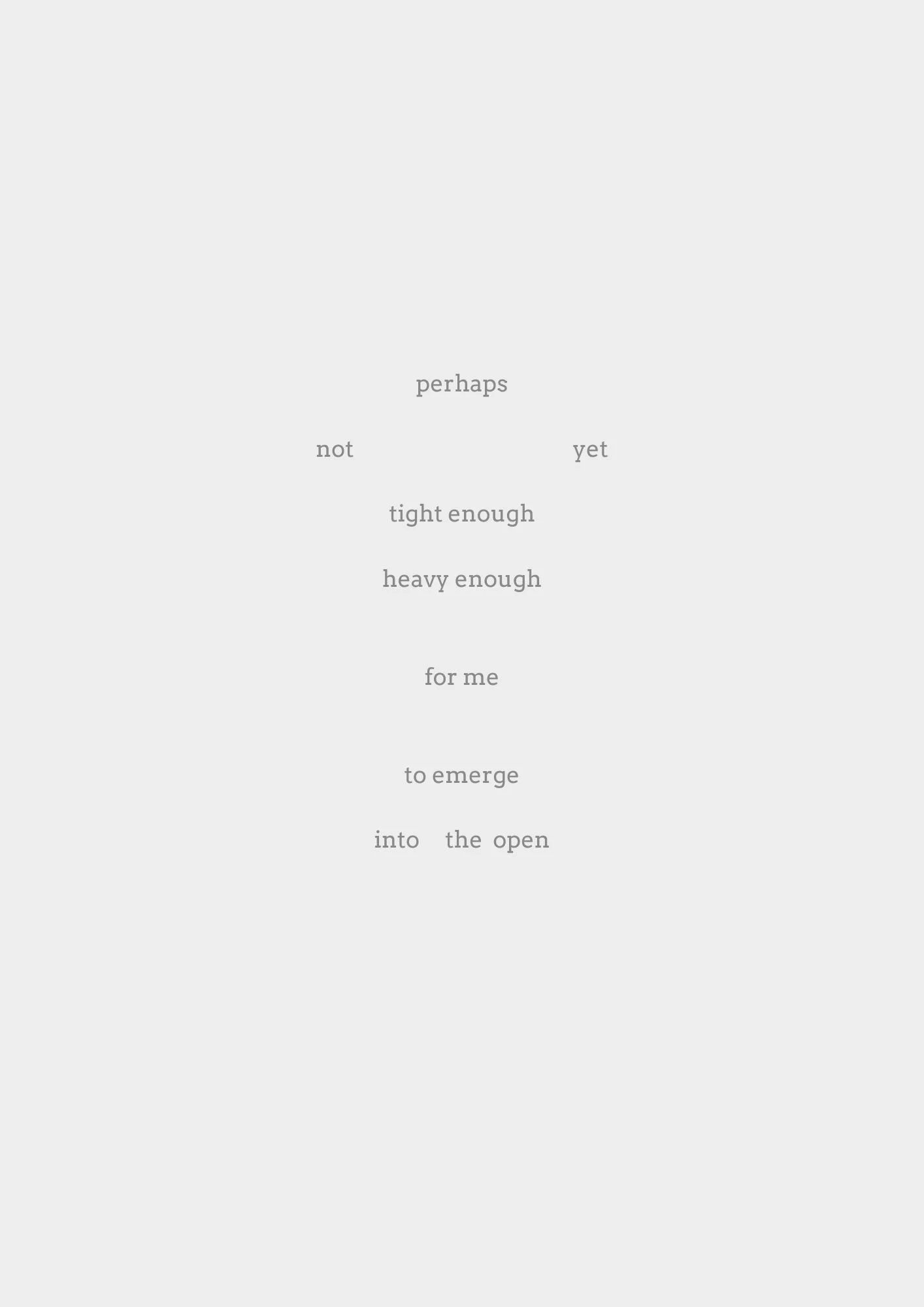
The poems by Kristina Ivić accompanying the exhibition constitute an attempt to restore to the woman’s body and the artist’s body the right to speak and to name their own “I.” In her writing practice, the artist rejects rigid rational structures and linearity, turning instead toward an intuitive, fragmentary, emotional, and embodied mode of expression. The artist’s body ceases to be an object of control and becomes a source of language, words, memory, and subjectivity. The poetic form itself becomes a means of expressing not only the poetic and the emotional, but also the physical — that which is inherently bound to human corporeality, that which we are ashamed of, fear, and continually attempt to conceal.
The moment we find ourselves standing before an artwork in an exhibition, we are confronted with a kind of social contract that conditions our experience of physical presence within space. We view artworks from a prescribed distance, within predefined boundaries of movement and perception, almost as if we never encounter the work directly but only through established patterns of viewing in which our own bodies and gestures are regarded as potentially disruptive or dangerous.The experience of bodily communication with art remains largely conditioned and constrained by learned conventions of behavior and by a fear of the body that must remain controlled, distant, and disciplined.
We perceive the physical boundaries of our own bodies, as well as those of the external world, exclusively through touch — through contact with our own bodies, with other bodies, and with the objects around us. Yet the atomic structure of matter is such that what we call touch is, in fact, the sensation of resistance between two surfaces. Perhaps for this very reason, touch, as our first natural attempt at communication with the outside world, remains simultaneously intimate, mysterious, and paradoxical. By allowing touch, the artist restores to the viewer’s body the right to a direct experience of space and matter, liberating sculpture from an exclusively visual mode of perception.
In Kristina Ivić’s artistic practice, the body emerges as the only enduring refuge and site of belonging — a place of generational connection, of shaping one’s identity as both woman and artist, but also a space from which to challenge inherited and predetermined destinies. It becomes a space for resisting predetermination through trust in one’s own subjectivity.
Text written by Veronika Podrjadova
O telu i drugim promenama
Radovi predstavljeni na ovoj izložbi nastajali su tokom više godina, kao deo kontinuiranog procesa samoupoznavanja i suočavanja vajarke sa promenama u razmišljanju i istraživanju, ličnim strahovima i potrebom za bliskošću sa svojim telom kao načinom artikulacije sopstvenog postojanja. Odnos prema vajanju i kamenu, kao osnovnom materijalu koji koristi u svojim radovima, Kristina Ivić razvija kroz intuitivan proces rada, bez unapred definisanih formi i skica. Skulpture nastaju kao rezultat poverenja u sam čin oblikovanja, a, samim tim – i poverenja u istinitost sopstvenog osećaja prema materiji, dopuštajući da forma bude otkrivena, a ne kontrolisana. U tim oblicima, često nalik organskim, prisutan je odnos otpornosti, nežnosti, ranjivosti, kao i napetosti između potrebe da se telo zaštiti i potrebe da ono bude prepoznato, prisutno i viđeno. Radovi Kristine Ivić zato deluju istovremeno blisko i neuhvatljivo – kao fragmenti nečega jako poznatog, ali još uvek neimenovanog.
Svaki trag u materijalu ostaje vezan za gest tela koje ga je oblikovalo. U tom odnosu, granica između tela koje oblikuje i „tela“ skulpture koje nastaje postaje nestabilna. Skulptura postaje zapis fizičkog iskustva, ali i prostor u kojem telo može ponovo da se čuje ne kao disciplinovana forma, već kao nešto promenljivo i živo. Vajanje u kamenu podrazumeva zanatsku veštinu preciznosti poteza, ali u trenutku dodira vajarke sa materijalom, forma počinje da funkcioniše kao nastavak telesnog, emotivnog, neizgovorenog. Svaki oblik koji nastaje kroz njen rad nosi trag nečega što je u njoj odavno prisutno i čemu daje slobodu da se oblikuje u materijalu.
Tema telesnog u radovima Kristine Ivić se javlja kroz iskustvo življenja u telu danas – telu koje pamti, oseća, trpi, menja se i pokušava da opstane unutar ritmova savremenog života. Istovremeno, čini se da smo izgubili poverenje u sopstvenu telesnost, naviknuti da telo posmatramo kao nešto što treba kontrolisati, ubrzati, oblikovati ili prevazići. Nasuprot logici savremenog kapitalizma koja ne dopušta zastoj, introspekciju, sporost, ni blagost, skulptura i sam materijal otvaraju prostor drugačijeg ritma, trajanja i drugačijeg doživljaja vremena.
Dimenzije umetničkih radova, pritom, uvek opažamo kroz odnos prema svom telu – merimo ih sopstvenom visinom, blizinom, pokretom i prisustvom – zbog čega je susret sa skulpturom istovremeno i susret sa svešću o sopstvenoj dimenziji fizičkog. Prisustvo minijaturnih skulptura i veza u stvaralaštvu Kristine Ivić dodatno preispituje pojam „ženskog zanata“ i tradicionalno ženskih oblika rada koji su, kroz istoriju, često bili potiskivani u prostor privatnog, intimnog i nevidljivog. Vez se ovde pojavljuje kao oblik beleženja, ponavljanja i telesnog rada, kroz koji se uspostavlja kontinuitet ženskog iskustva, sećanja i svakodnevnih gestova. Korišćenjem materijala koji pripadaju porodičnom i ličnom prostoru, umetnica otvara pitanje nasleđa i odnosa prema unapred zadatim ulogama, ali i mogućnosti njihovog preoblikovanja.
U binarnoj podeli razum-telo, u kojoj je razum tradicionalno zauzimao privilegovanu dominantnu poziciju i bivao asociran sa „muškim načelom“, telo se posmatralo kao „žensko“ – iracionalno, neukrotivo, emotivno i kao nešto što zahteva kontrolu. Ovo suprotstavljanje povezuje se i sa drugim hijerarhijskim parovima poput logike i osećanja, svesti i senzibiliteta, spoljašnjeg i unutrašnjeg, sopstvenog i drugog, u kojima su telesno i čulno gotovo uvek bili sekundarni u odosu na racionalno.
Upravo zbog toga, pesme Kristine Ivić koje prate izložbu postaju pokušaj da se sopstvenom telu žene i telu umetnice vrati pravo na glas i imenovanje sopstvenog „ja“. U praksi pisanja autorka odbacuje strogu racionalnu strukturu i linearnost, obraćajući se intuitivnom, fragmentarnom, emotivnom i telesnom načinu izražavanja. U tom kontekstu, telo umetnice prestaje da bude objekat kontrole i postaje izvor jezika, reči, sećanja i subjektivnosti, a sama forma pesme postaje način da se izrazi ne samo poetsko i osećajno, već i fizičko – ono što je prirodno svojstveno ljudskoj telesnosti, ono čega se stidimo, plašimo i što uvek pokušavamo da sakrijemo.
U trenutku kada se nađemo ispred umetničkog dela na izložbi, suočavamo se sa jednom vrstom društvenog dogovora koji uslovljava naš doživljaj i iskustvo fizičkog prisustva u prostoru. Posmatramo umetnička dela sa određene distance, unutar unapred definisanih granica pogleda i kretanja, gotovo kao da se sa samim delom nikada ne susrećemo neposredno, već kroz zadate obrasce percepcije u kojima sopstveno telo i poteze smatramo potencijalno opasnim. Iskustvo telesne komunikacije sa umetnošću gotovo uvek ostaje uslovljeno i ograničeno naučenim konvencionalnim pravilima ponašanja i strahom od tela koje mora da bude kontrolisano, udaljeno, disciplinovano.
Fizičke granice sopstvenog tela, a i spoljnog sveta, doživljavamo isključivo u dodiru – sa sopstvenim ili drugim telom, sa predmetima oko nas. Ipak, atomska struktura je formirana tako da je ono što nazivamo dodirom zapravo osećaj otpora dve površine. Možda upravo zbog toga, dodir, kao prvi prirodni pokušaj komunikacije sa spoljnim svetom, ostaje istovremeno intiman, misteriozan i paradoksalan. Dozvoljavajući dodir, umetnica vraća telu posmatrača pravo na neposredno iskustvo prostora i materije, oslobađajući skulpturu isključivo vizuelnog načina percepcije.
U stvaralaštvu Kristine Ivić, telo se javlja kao jedino trajno utočište i prostor pripadanja, mesto generacijske povezanosti, oblikovanja sopstvenog identiteta žene i umetnice, ali i kao prostor pokušaja distanciranja od unapred zadate i nasleđene sudbine – pokušaja da se izmakne predodređenosti kroz poverenje u sopstvenu subjektivnost.
Tekst pisala Veronika Podrjadova